Human Design Analyst Training: Separating Curiosity from Serious Commitment
The Complete Guide to Becoming a Human Design Analyst: What You Need to Know Before You Start
When you understand what makes someone fundamentally them—not the conditioning, not the false narrative they've been sold about who they should be, but the actual architecture of their consciousness—everything changes.
This is what waits for you on the other side of Human Design Analyst training. Not a certification to collect. Not another credential for your bio.
This is a completely different way of seeing people, yourself, and the world.
If you're considering this path, here's what you actually need to know.
The Real Transformation Starts With You
The first thing to understand: Human Design Analyst training isn't primarily about learning information. It's about decondition yourself first, then learning to translate what you see to others.
Laveena B. Archers, who has been studying and working with Human Design since 2012 and has from 2014 worked for Jovian Archive and associated companies which are the source of the Human Design System, in leading professional analyst training since 2017, puts it directly: "By using your authority, becoming your own authority, following your decision-making strategy—that's when life unfolds and unpacks exactly as it should."
She speaks from lived experience. In 2008, she was hospitalized for attempted suicide. Her diagnosis: bipolar disorder, autistic spectrum. But through years of studying Human Design, learning her own design, aligning with her strategy and authority rather than her conditioned mind, she became "a radically new, totally different person." Not healed in a therapeutic sense. Transformed through alignment.
This matters because it's the baseline promise of the work: if you do this right, it changes you first. Your students and clients experience the impact of your own transformation.
What You're Actually Learning (And It's More Than You Think)
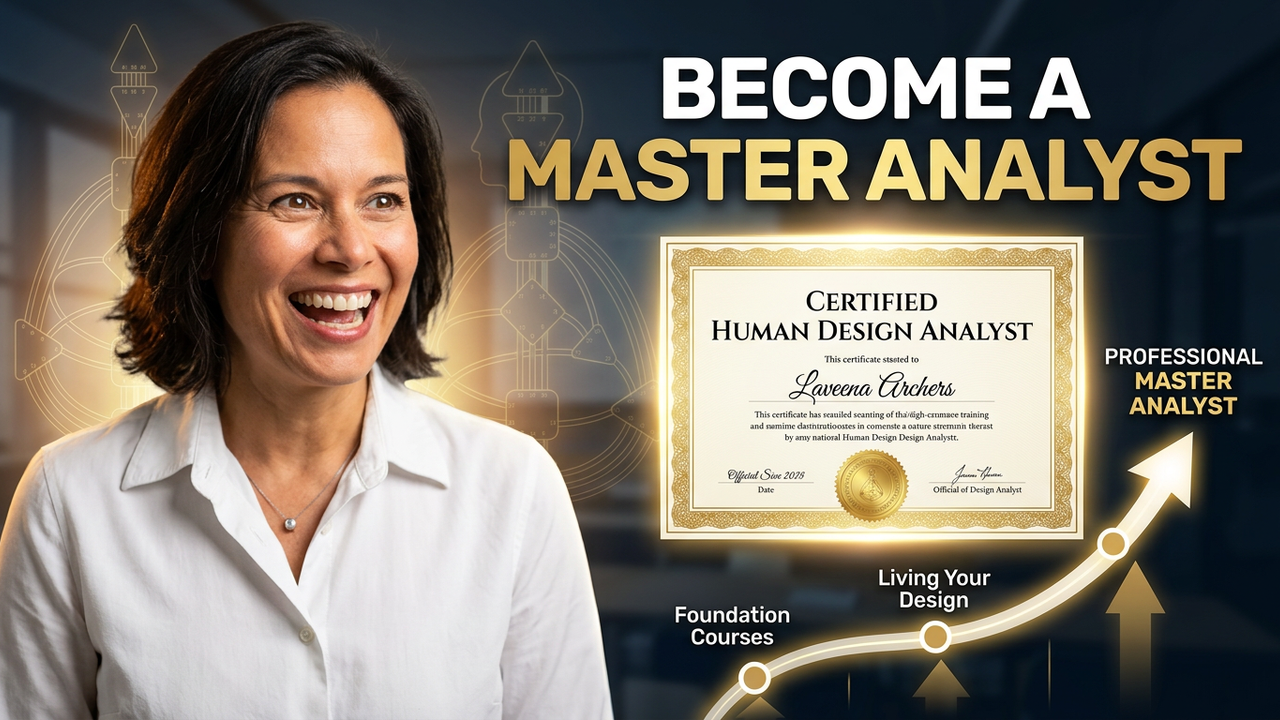
Human Design Analyst training is structured in four levels, each building on the last:
Level 1: Foundation Fluency (3 semesters) You become fluent with the body graph mechanics—the gates, channels, centers, and how they activate. This is where you learn to read a basic chart with accuracy and deliver what's called a "Rave Analysis Method" reading: the four views (type, strategy, authority, and profile). By the end of Level 1, you're technically an analyst. Everything after this adds depth.
Level 2: The Cycles (2 semesters) This is where it gets rich. You learn how life unfolds across cycles—not just the famous Saturn Return at 29-30, but the Chiron Return at 49-50, the Nodal cycles, the annual solar return that happens every year. One semester is dedicated to relationships (how two charts interact). The other goes deep into cycles, which Laveena calls "your bread and butter" for real professional work. Most people never go this deep, which is why most analyst readings feel surface.
Level 3: Incarnation Cross & Evolutionary Purpose (1 semester) Your incarnation cross is the answer to "Why am I here?" It's the combination of your sun, earth, and the lunar nodes—literally your life's purpose written in the body graph. This semester transforms how you work with clients who are lost, confused, or wrestling with meaning.
Level 4: Mastery & Professional Practice (1 semester) This is about learning how to do the work without burning yourself out. How to hold space. How to deliver readings that stick. How to become the kind of analyst people want to work with repeatedly.
Total timeline: 2.5 years if you move steadily, but there's no rush. Your year of access begins when you sign up for each class, so you can layer them or space them out based on your life.
The Curriculum Nobody Tells You About
Beyond the standard four levels, the training includes materials that most other programs skip:
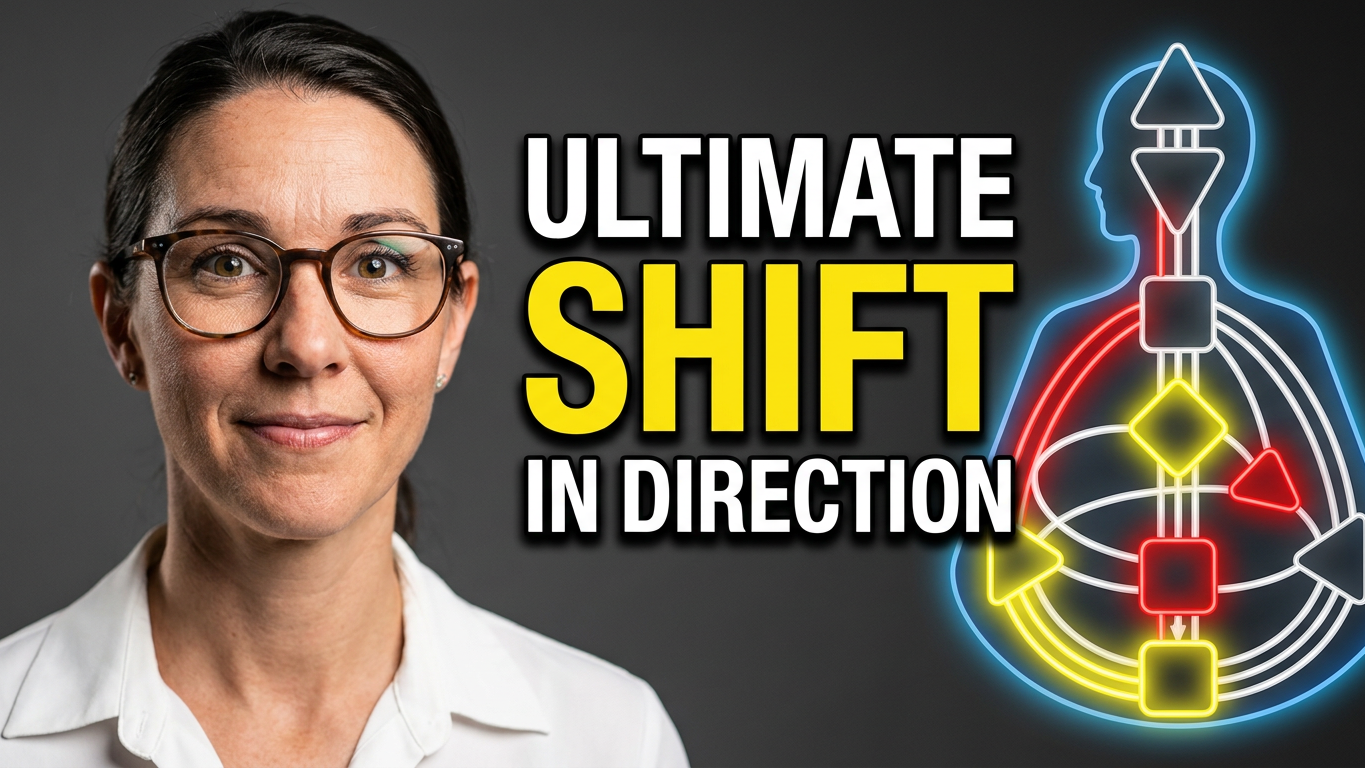
Variables: The arrows on your chart that show your digestion of food and information, your environmental needs, your perspective, and your motivation. This is how you actually help people thrive, not just understand themselves.
Primary Health System: How your design determines what foods and information actually work for your body. Laveena created "Thrive by Design" specifically around this—because understanding Steve Jobs's chart, she could see exactly how he compromised his health and likely shortened his life decades.
Tonal Qualities & Layers: Most analysts teach gates at face value. Real analysts understand the keynotes at multiple layers—color, tone, base—which lets you deliver insight that lands differently for different clients.
The training materials include:
Ra Uru Hu’s Rave I Ching (your primary textbook—64 gates, 6 lines each, explained in depth)
Ra Uru Hu’s Line Companion (detailed reference for gate lines)
Radical Transformations (Laveena's bonus work for you on Physiology and Psychology)
Elemental I Ching (additional layer work)
Live study groups for practice as well as live mentoring and support groups with her team
Access to live analyst readings as examples, transit reports and more
The Non-Negotiable Part: Your Own Chart, Your Own Work
Here's what separates authentic training from hobbyist learning:
Generators: study your own chart first. Not your friend's. Not your client's. Yours.
Projectors: Study everyone around you physically. Don’t have enough to study? Join our study groups or get your favorite famous people’s charts
Manifestors: Study your impact
Reflectors: Study your Lunar Cycle
The reason is simple: you can't translate what you don't understand in yourself. Your mind will get in the way. Your conditioning will cloud what you see. You have to move through your own deconditioning process—the shattering of the false self, the uncovering of what's actually true—before you can authentically guide someone else through theirs.
This is why the training doesn't have hard deadlines. You can't rush deconditioning. You can't force individuation. A caterpillar doesn't become a butterfly faster if you stress it.
The Reality Check: Who Should Actually Do This
Not everyone who's fascinated with Human Design needs to become an analyst.
Do this training if:
You're a coach, consultant, adviser, or work in helping professions and want Human Design as your primary tool
You're willing to study—really study, not just watch videos and expect your life to change
You're committed to learning for yourself first, not as a quick path to income
You can follow your strategy and authority rather than letting your mind drive the decision
You're prepared to be changed by this work
Don't do this training if:
You want a quick certification to add to your bio
You're hoping to make money before putting in the learning
You think you can buy a course and have it passively improve your life
You need external validation that you're "doing it right"
You're using this as a substitute for therapy or healing work you actually need
The Money Question
Here's what Laveena says directly: "If you decided this is it—you're going to let go of everything else and make this work—this work would support you."
But she's careful to add: "I can't promise that. I want you to trust you."
The reality is that most analysts don't hang out their shingle as full-time practitioners. They use the knowledge in their existing work—as coaches, in their businesses, with their teams. Some teach Living Your Design (the foundational course) to fund their analyst training. Some do readings and analyses on donation basis while they practice.
The people who succeed financially with this are usually:
Those already established in another helping profession
Those willing to build slowly
Those who see it as part of a larger offering (not the whole offering)
What You'll Encounter: The Common Roadblocks
The most honest part of this training is how Laveena addresses what actually stops people:
"Can I really do this?" Your mind will tell you no. It will compare you to other people. It will remind you of past failures. This is normal. Every single analyst has heard this voice. The work is learning to recognize it as conditioning, not truth.
Perfectionism and comparison: Stop. You're not supposed to be like the "star student" or Laveena or anyone else. You have your own way of seeing, your own style, your own voice. That's the point.
Trying too hard too fast: If you're a projector trying to force your way in, you'll burn out. If you're a generator trying to do everything at once, you'll scatter. Honor your type and strategy. The knowledge unfolds when it's ready.
The grief of deconditioning: As you move through the training, you'll see how much of your life has been conditioning—false narratives, inherited beliefs, ways of being that were never actually yours. This can be grieving. It's also liberation. Let it be what it is.
The Structure That Actually Supports Learning
The training has shifted toward what works:
No live teaching required (respects everyone’s energy; you're not pressured to keep up)
Recorded classes that you access on your timeline
Open enrollment (no cohort pressure or FOMO)
Year-long access per class (emotional folks, undefined roots people, everyone gets time to digest)
Live study groups at different times for practice
Mentors beyond just the main teacher (so you can find resonance with different facilitators)
Forum-based questions (knowledge shared with everyone, not just you)
What You'll Actually Be Able to Do
By the end of Level 1, you can deliver a foundational Rave Analysis: type, strategy, authority, profile, definition. This alone changes how someone sees themselves.
By Level 2, you can read relationships (why this person triggers you, why that partnership works) and cycles (what's happening in your life right now, based on planetary transits).
By Level 3, you can answer "What's my life actually for?" through incarnation cross analysis.
By Level 4, you're ready to work with people in real, sustained, professional ways.
The Real Why: Why This Matters Now
Laveena is clear about the larger context: "We're in a new era. This is an incredible transformation. The gift of individuation and divine difference—seeing it clearly in your own unique sovereign being and in others—is the most transformative gift."
Right now, AI is generating generic Human Design reports. Anyone can feed a chart into software and get data back. But data isn't insight. A report isn't a reading.
What can't be automated: one human being seeing another human being—really seeing them—and reflecting back what's true, without agenda, without trying to fix them, just witnessing their uniqueness and helping them trust themselves.
That's what an analyst does. That's what the training teaches you to become.
The Practical Next Step
If this resonates:
Start with yourself. Learn your chart. Get a Living Your Design awakening experience if you're new to Human Design.
Find your entry point. Some people go straight to analyst training. Others do guide training first (it's faster, lets you work while you study). Both are valid
Write to the program and tell them where you're at: What training have you done? What's your chart? Why now? They'll help you figure out the right path.
Join a study group. Before you even start, you can observe or participate in live study groups where current students practice.
Trust your authority. This isn't a decision your mind makes. It's a decision your body makes. Do you feel called to this? Does your strategy say yes? That's your answer.
Final Word
Human Design Analyst training is not for everyone.
But for those it's for—the people who want to dedicate themselves to understanding the mysteries of what makes someone them, the coaches and consultants and guides who want real tools instead of theories, the people ready to be changed by their own work—it's one of the most complete, rigorous, and transformative professional trainings available.
The promise isn't that you'll become rich or famous. It's that you'll do work that matters. Work that's yours. Work that helps people become themselves.
And that's worth the commitment.
If you're ready to explore whether Human Design Analyst training is right for you, reach out or look for information on the current training cohorts. There's no rush. Your timeline is your timeline.

This package includes all Human Design Analyst Levels.
Includes unlimited LIFETIME access to ALL Training, mentoring and interactive study groups, professional mentoring and course updates.
Get your professional Analysis Mastery of Human Design, meet all prerequisites for higher-level Human Design professionals, and have the educational mentoring to succeed using the system.
Learn how rewarding it is to give precise advice to guide your clients to success, successfully manage your human environment, and work from anywhere with anyone from any place in the world in a satisfying way.